
The future of collision repair
Artificial intelligence, software-defined vehicles and autonomous technology won’t eliminate collision repair — they’ll redefine what it means to repair a vehicle.
Walk into a successful collision repair facility in 2040, and you’ll probably recognize it — but only at first glance.
There will still be technicians, paint booths, frame racks and damaged vehicles. But beyond those familiar sights, almost everything else may have evolved.
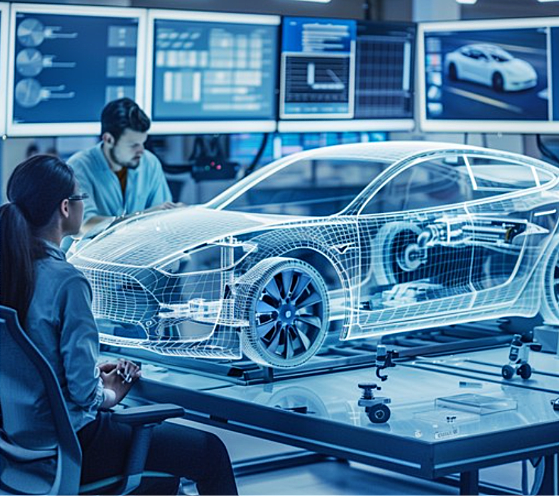
The collision repair shop of the future will look less like a traditional body shop and more like a hybrid of a manufacturing facility, electronics laboratory and software service center.
While predicting the future is never an exact science, several trends already reshaping today’s collision repair industry provide a glimpse into where the profession is headed over the next 10 to 15 years.
Repairs Begin Before the Vehicle Arrives
Tomorrow’s repair process may begin long before a damaged vehicle reaches the shop. Connected vehicles already transmit crash data to automakers and insurers. In the future, vehicles could automatically upload diagnostic information, photographs from onboard cameras, sensor status and structural impact data immediately following a collision.
Artificial intelligence (AI) could compare that information against millions of previous repairs, recommend OEM repair procedures, identify required replacement parts and generate an initial repair plan before the vehicle is towed.
Rather than writing estimates from scratch, estimators may spend much of their time validating AI-generated repair plans and ensuring OEM procedures are followed.
The Rise of the Digital Repair Planner
As software increasingly handles administrative tasks, repair planners will become technology managers as much as collision experts.
Instead of searching through dozens of OEM repair documents, AI assistants may instantly identify required scans, calibrations, one-time-use parts, corrosion protection procedures and structural repair limitations. Human expertise will remain critical — not because computers lack information, but because every collision remains unique.
Determining whether damage is repairable, recognizing hidden structural deformation and exercising professional judgment will continue to separate experienced repair professionals from automated systems.
More Specialized Structural Repairs
Vehicle construction is becoming increasingly complex. Today’s mix of ultra-high-strength steel, aluminum, magnesium, carbon fiber and composites is only the beginning.
Future vehicles may incorporate structural battery packs, cast aluminum “mega-castings,” multi-material assemblies, thermoplastic composites and even self-healing materials.
Repair facilities may dedicate separate work areas to different structural materials, each equipped with specialized tooling, contamination controls and environmental requirements.
Some repairs once considered routine could become complete module replacements as manufacturers prioritize crash performance over field repairability.
Software Becomes a Repair Operation
Today’s technicians already perform pre- and post-repair scans. Tomorrow’s technicians may spend as much time programming vehicles as replacing body panels.
Software-defined vehicles receive continuous over-the-air updates that can alter everything from ADAS performance to battery management systems.
After structural repairs, technicians may need to verify software versions, synchronize vehicle modules, validate cybersecurity systems and install manufacturer-certified software packages before repairs are complete.
Programming could become a billable labor operation comparable to structural repairs today.
ADAS Evolves into Autonomous Systems
Current vehicles rely on cameras, radar and ultrasonic sensors. By 2040, many vehicles may incorporate multiple LiDAR sensors, high-resolution imaging systems, AI processors and increasingly autonomous driving capabilities.
Calibration centers may resemble laboratory environments where technicians verify sensor alignment to fractions of a degree using robotic positioning systems and automated validation equipment.
Rather than calibrating individual sensors, shops could be certifying complete autonomous perception systems.
AI Enters the Paint Booth
Paint technology is also likely to become more automated.
Robotic spray systems already exist in manufacturing plants. Future collision repair facilities may utilize collaborative robots that perform repetitive refinishing operations while painters oversee quality control, blending and color verification.
AI may continuously monitor temperature, humidity, film thickness and curing conditions while automatically adjusting spray parameters.
Color matching could become nearly instantaneous as spectrophotometers communicate directly with automated mixing systems capable of dispensing materials without technician intervention.
The Technician Shortage
The collision technician of 2040 may look very different from the stereotype of decades past.
Tomorrow’s workforce will likely include individuals with backgrounds in:
Robotics
Software engineering
Mechatronics
Cybersecurity
Electronics
Data analytics
Advanced manufacturing
Traditional craftsmanship will remain essential, but future technicians may also carry laptops, tablets and augmented reality headsets alongside welding equipment and body tools.
Trade schools are already expanding curricula to include electric vehicles, ADAS, diagnostics and networking technologies. That evolution will only accelerate.
Shops Become Technology Centers
Revenue streams will likely expand beyond collision repair itself. Future facilities could generate income from:
ADAS calibrations
Battery health evaluations
Software updates
Autonomous vehicle certifications
Sensor verification
Fleet technology management
Subscription maintenance programs
Digital vehicle inspections
Predictive diagnostics
Some shops may rarely perform conventional body repairs while specializing in electronics restoration and system validation.
Data: New Competitive Advantage
Perhaps the biggest change won’t be visible.
It will be data.
AI will analyze repair cycle times, technician productivity, parts procurement, paint usage, calibration success rates and customer satisfaction in real time.
Shop owners will increasingly make decisions using predictive analytics rather than historical reports.
Inventory systems may automatically reorder materials before they’re needed. Equipment could schedule its own maintenance. Even staffing decisions may be guided by AI forecasting future repair demand.
The Human Element Remains
Despite all the technological change, one thing is unlikely to disappear: people.
Customers will still want confidence that their family’s vehicle has been repaired correctly. OEM repair procedures will continue evolving. Complex judgment calls will remain part of every significant repair. Technology may automate repetitive tasks, but trust, craftsmanship and accountability cannot be outsourced.
The best collision repair facilities of 2040 won’t necessarily be those with the most robots or the newest software. They’ll be the shops that successfully combine cutting-edge technology with highly trained professionals who understand that every repair is ultimately about restoring safety.
Looking Beyond the Wrench
For decades, collision repair has reinvented itself with every new generation of vehicles. From lacquer paint to waterborne, from frame-on vehicles to the unibody, from hand-written estimates to computer-generated, from mild steel to aluminum and high-strength steel, the industry has consistently adapted.
The next decade promises even greater transformation. The body shop of the future may feature autonomous diagnostic systems, AI-assisted repair planning, robotic refinishing and software-certified technicians. But at its core, the mission will remain remarkably familiar: returning damaged vehicles to safe, pre-loss condition.
The tools may change. The technology certainly will. But the commitment to craftsmanship — and protecting the people who drive those vehicles — will remain the foundation of the collision repair profession.